

FIFA News Wrap May 2 2026 World Cup Preparations Ticket Debate & Global Developments
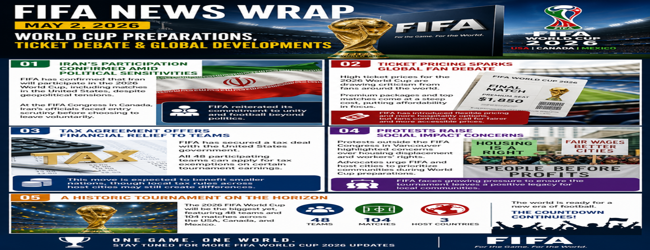
FIFA News Wrap – May 2, 2026: World Cup Preparations, Ticket Debate & Global Developments
As the countdown to the 2026 FIFA World Cup continues, global football is witnessing significant developments both on and off the pitch. From political challenges to fan concerns and financial decisions, FIFA’s preparations for the historic tournament are drawing worldwide attention.
Iran’s Participation Confirmed Amid Political Sensitivities
FIFA has officially confirmed that Iran will take part in the 2026 World Cup, including matches scheduled in the United States. The decision comes despite ongoing geopolitical tensions and earlier uncertainty regarding travel and participation logistics.
However, recent events at the FIFA Congress in Canada highlighted the complexities surrounding international football governance. Representatives from Iran reportedly faced entry-related scrutiny before opting to withdraw voluntarily. The situation reflects broader political sensitivities that may continue to influence tournament preparations.
Ticket Pricing Sparks Global Fan Debate
One of the biggest talking points ahead of the World Cup is the rising cost of match tickets. Premium hospitality packages and high-demand fixtures are being priced at levels that many fans consider unaffordable.
FIFA has responded by adjusting its ticketing strategy, including flexible pricing and expanded hospitality offerings. Despite criticism, the organization maintains that overall demand remains strong, particularly for marquee matches. The debate continues as fans call for more accessible pricing options.
Tax Agreement Offers Financial Relief to Teams
In a major development, FIFA has secured a tax arrangement with United States authorities that will allow participating teams to benefit from tax exemptions on certain tournament-related earnings.
This agreement is expected to ease financial burdens, especially for smaller football nations competing on the global stage. However, variations in regional tax regulations across host locations could still present logistical challenges for teams and organizers.
Protests Raise Social Impact Concerns
Preparations for the World Cup have also sparked social concerns, particularly in host cities. During the FIFA Congress in Vancouver, advocacy groups and workers staged protests highlighting issues such as housing displacement and labor conditions.
These demonstrations serve as a reminder that large-scale sporting events often have far-reaching impacts beyond the game itself. Organizers may face increasing pressure to balance commercial success with social responsibility.
A Historic Tournament on the Horizon
The 2026 FIFA World Cup is set to be the largest in history, featuring 48 teams and an expanded match schedule across multiple host countries. The scale of the event is expected to redefine global football, offering more opportunities for emerging nations while increasing global engagement.
As preparations intensify, FIFA continues to navigate a complex landscape of sporting ambition, financial planning, and global expectations.

